Coffee Station Organizer Ideas for Clean, Usable Counters
For most counters, choose the smallest coffee station organizer that contains the daily-use supplies without blocking the coffee machine or usable prep space. Use a tray for visible quick access, a drawer or cabinet for the clearest surface, and a tiered shelf only when vertical clearance and reach are adequate; keep refill stock outside the active counter zone.
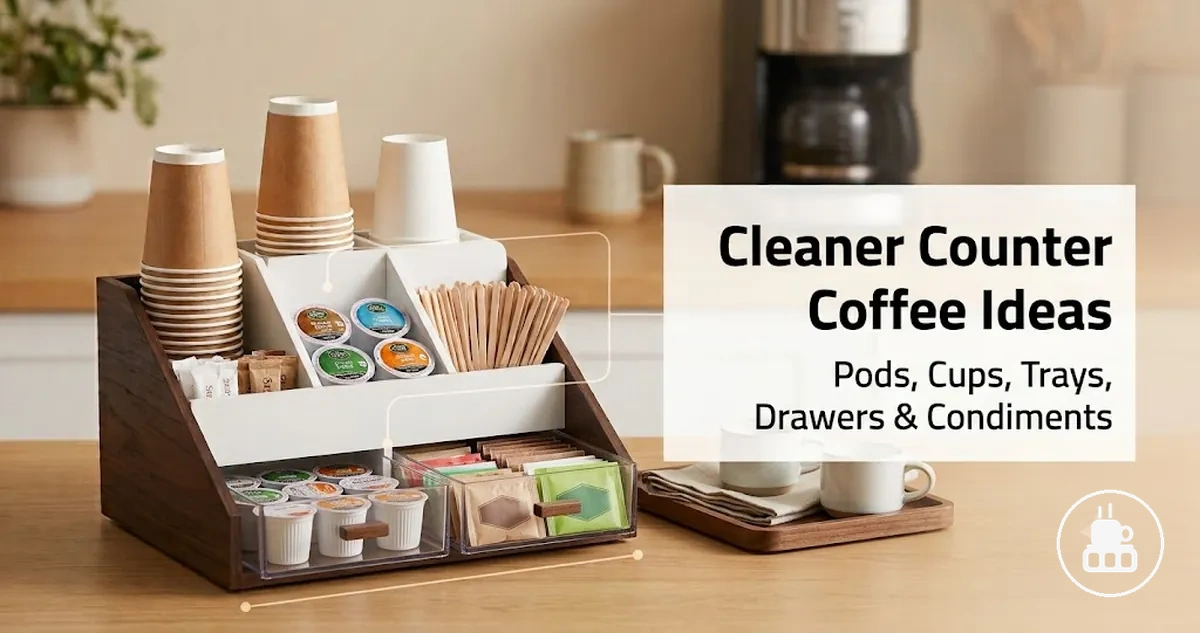
Choose a coffee station layout by counter need
Use the three fit conditions below to compare tray, drawer or cabinet, and tiered or shelf layouts. The result recommends a layout profile from this guide; it does not depend on seller-specific data.
Starting point: match the organizer to the routine, then keep refill stock outside the daily-use zone.
A layout only fits when the coffee machine can still be filled, opened, used and cleaned without moving the organizer.
Counter space, supply volume, and whether the worktop must serve other daily tasks determine which layout is practical. Decorative choices can help the station feel finished, but access, containment and cleanup remain the deciding criteria.
This guide focuses on organizer-led counter layouts rather than a kitchen remodel or a full product catalogue, so each idea is evaluated by how well it supports the coffee routine.
Clean Coffee Station Organizer Layout Basics
A clean coffee station organizer layout keeps the daily routine inside one defined counter zone while leaving the machine usable and the surrounding worktop clear. The organizer should contain the items used for the routine, not every refill or backup supply.
A layout is workable when you can fill the machine, operate lids or handles, place and remove a cup, reach daily supplies, and wipe spills without first moving the organizer. Organizer footprint, machine clearance, supply grouping and a clear cleanup boundary are the core fit checks; coffee station organizers are the broader category behind these layouts.
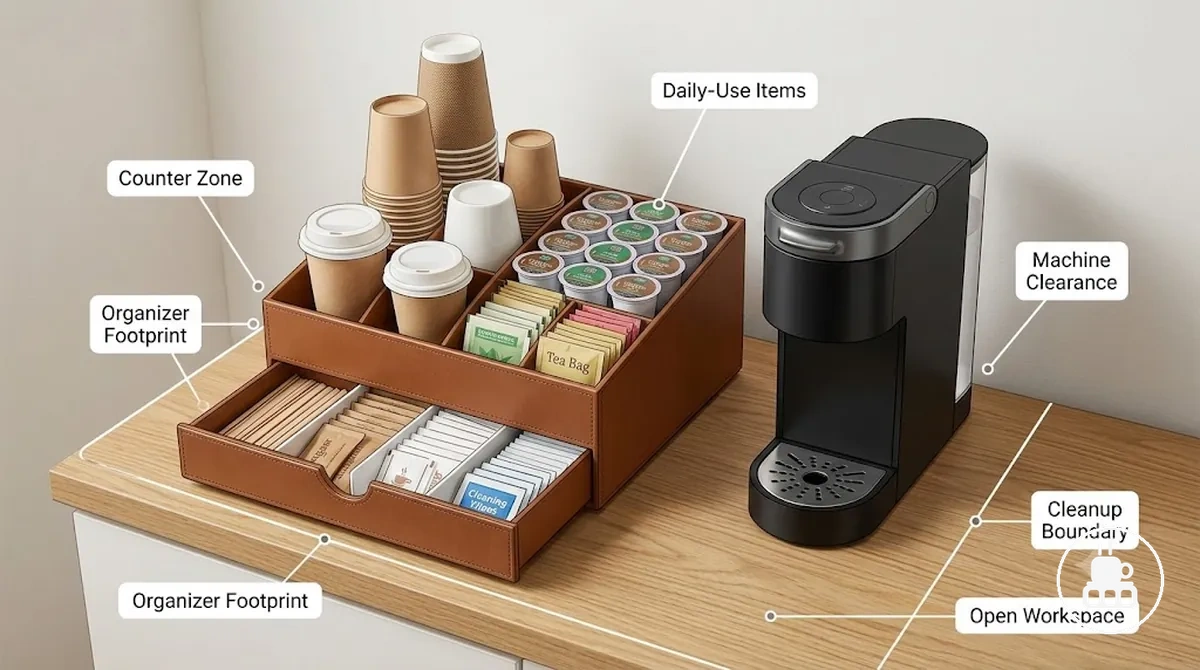
Recheck the layout when the machine, counter shape or daily supply volume changes. If a condition below fails, reduce the organizer footprint, move refill stock off the counter, or change the storage pattern.
Layout fit check
- Zone: one defined coffee area contains the daily routine.
- Machine access: filling, opening, brewing and cleaning remain unobstructed.
- Footprint: the organizer stays inside the allocated coffee zone.
- Grouping: daily-use supplies have clear positions instead of spreading across the counter.
- Cleanup: drips and loose items stay inside a practical wipe-down boundary.
- Counter edge: supplies do not encroach on adjacent prep or traffic space.
Countertop Coffee Station Layout Ideas for Daily Use
For daily use, the best countertop layout keeps the coffee machine and frequently used supplies close enough for a short routine while preserving the space needed to operate and clean the machine.
Compare layouts by access, visible counter use, vertical clearance and refill habits. The organizer types shown in layouts use tray, drawer or cabinet, and tiered or shelf patterns to solve the same storage problem in different ways.
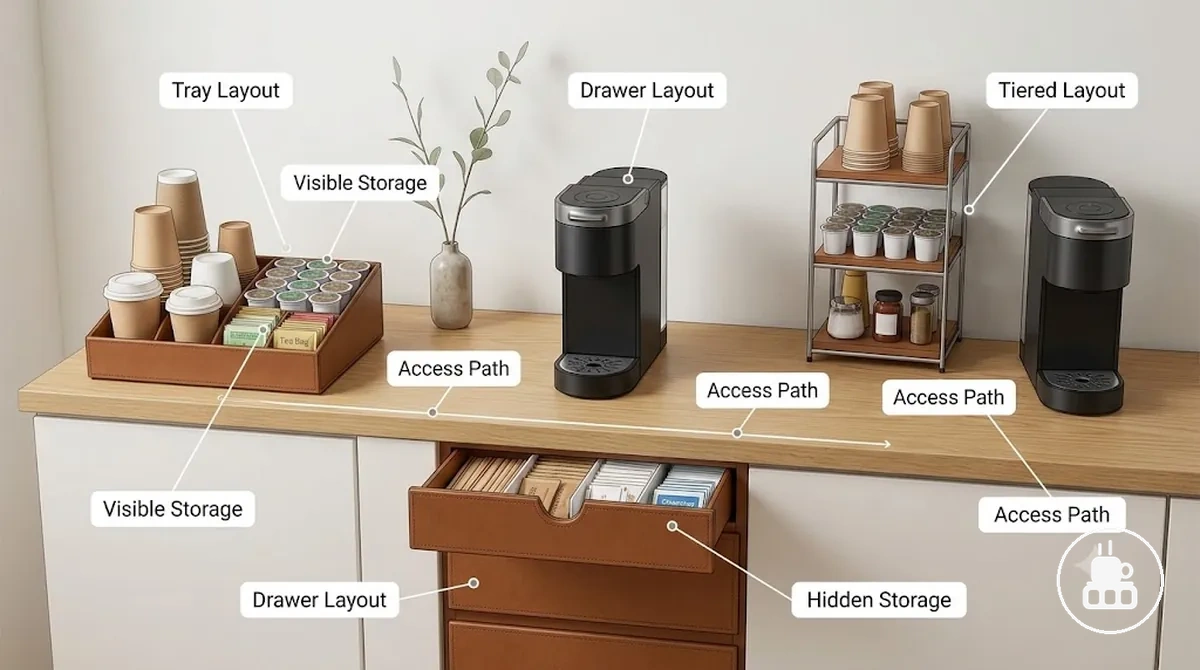
| Layout pattern | Best fit | Main trade-off | Choose it when |
|---|---|---|---|
| Tray | Fast, visible access to daily items | Uses open counter surface | Daily supplies fit inside one boundary and usable prep space remains |
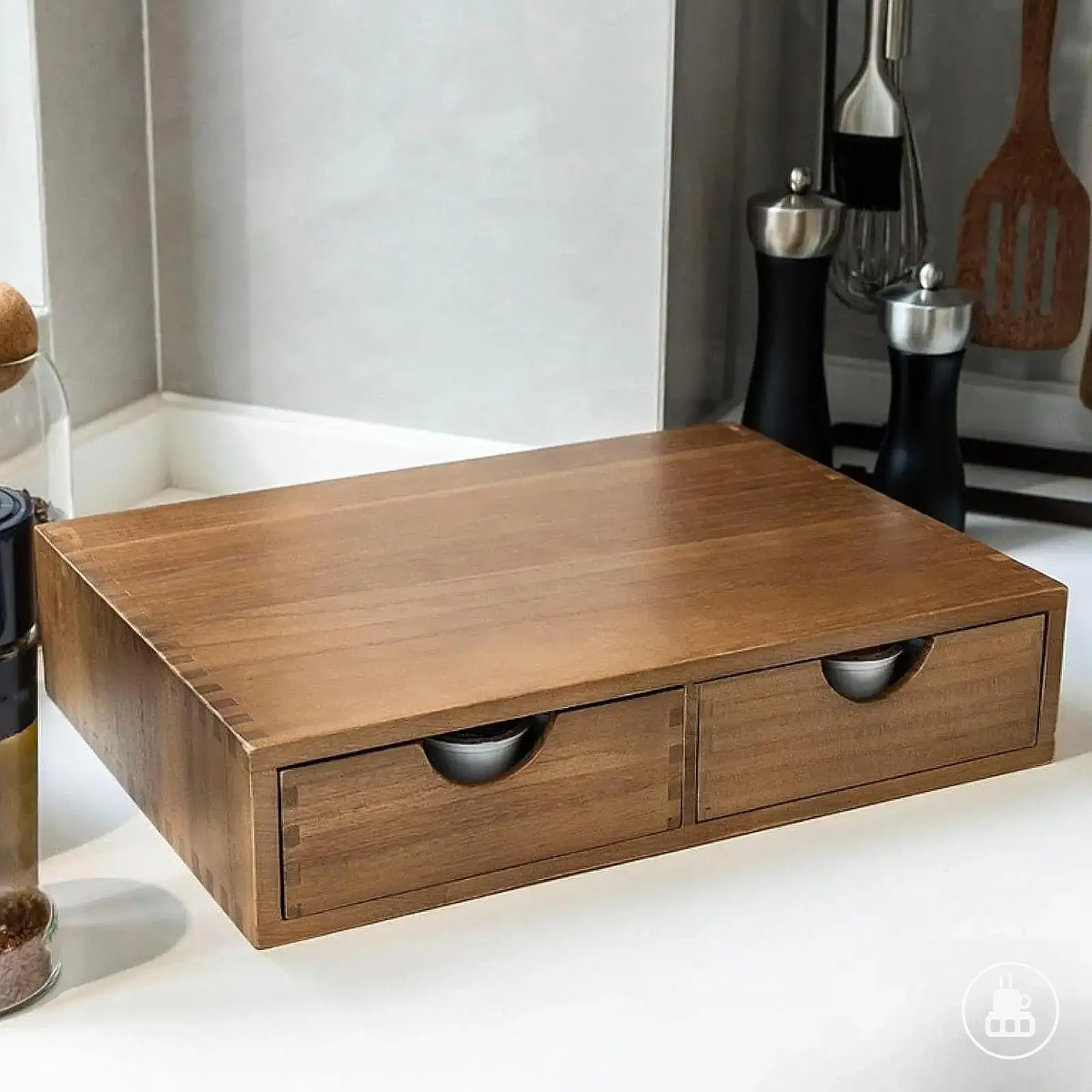
| Drawer or cabinet | Hidden storage and a clearer counter | Adds an open-and-reach step | Storage is close enough to the machine for routine access |
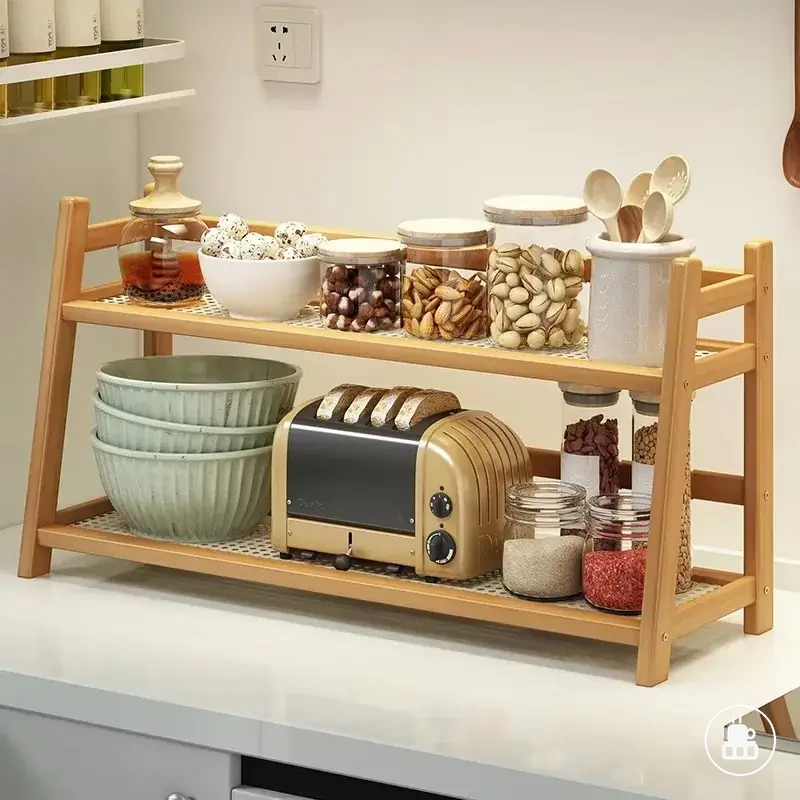
| Tiered shelf | More capacity per counter footprint | Requires vertical clearance and stable reach | Upper cupboards and machine lids or reservoirs remain unobstructed |
Use a tray when quick reach is the main priority, hidden storage when a clear surface matters more, and a tiered shelf when capacity is needed but vertical clearance is genuinely available.
After choosing the pattern, set up your coffee station organizer so the machine, cups and most-used supplies can be handled without shifting the storage unit.
Tray Layouts for Grouped Coffee Essentials
A tray groups loose coffee essentials on one movable surface and creates a visible storage boundary. It is a good fit when the tray holds daily-use items only and still leaves room to lift cups and wipe the surface.
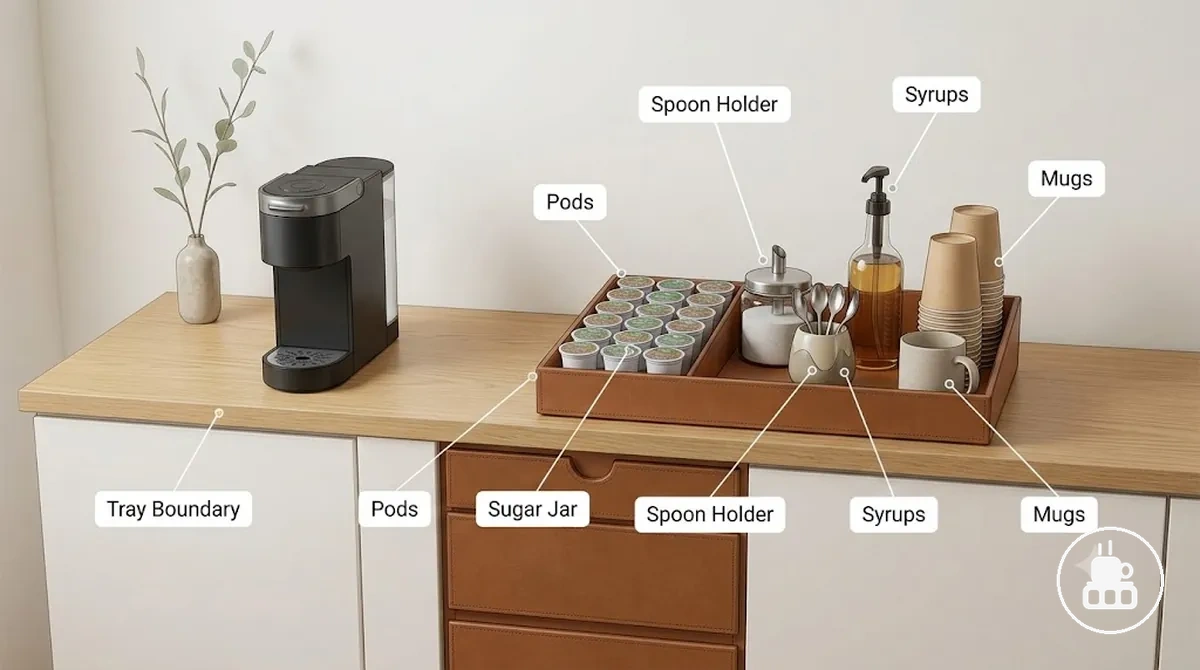
Use the tray boundary as a capacity limit: when items have to stack, spill outward or block cleanup, move lower-frequency supplies elsewhere.
What belongs on the tray
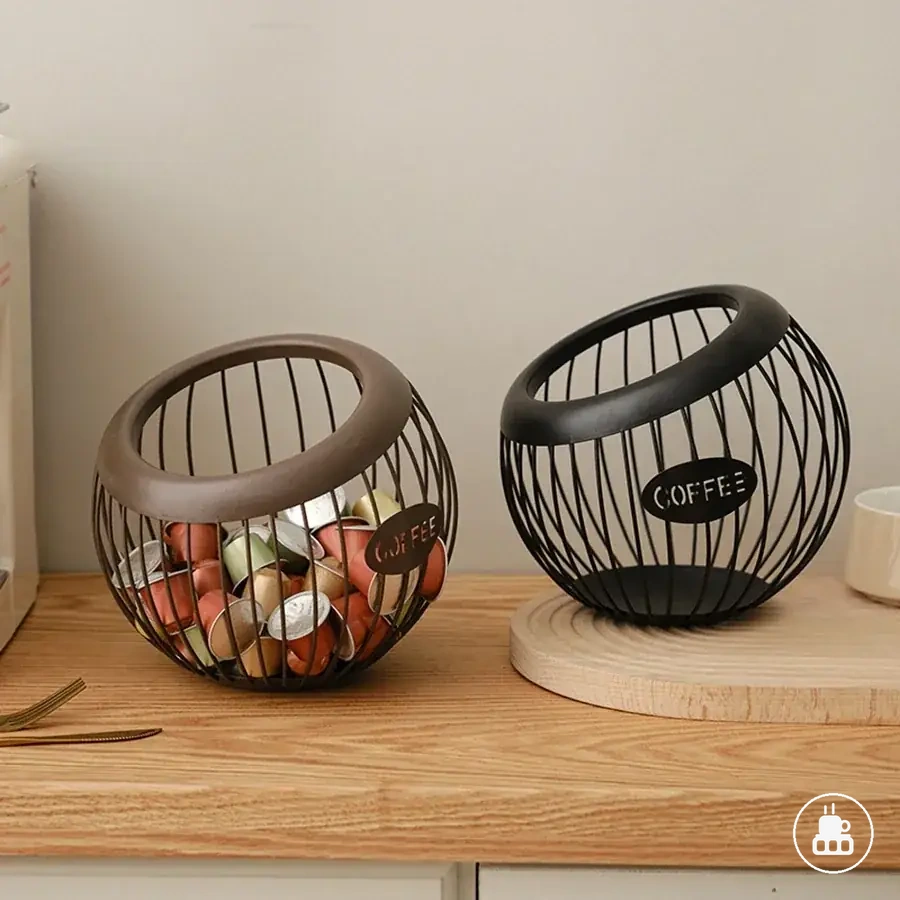
- Pods: keep the quantity used routinely; store refill stock elsewhere.
- Sugar and small jars: group only frequently used containers inside the tray boundary.
- Spoons: use one holder so loose utensils do not spread across the surface.
- Syrups: keep them on the tray only when bottles fit without crowding cup handling or cleanup.
- Mugs: display them on the tray only when enough open surface remains for the routine.
Drawer and Cabinet Layouts for Hidden Storage
Drawer and cabinet layouts keep backup supplies out of sight and preserve a clearer countertop. Hidden storage works best when it remains close enough to the coffee machine that retrieving a pod, filter or cup does not turn the routine into repeated back-and-forth movement.
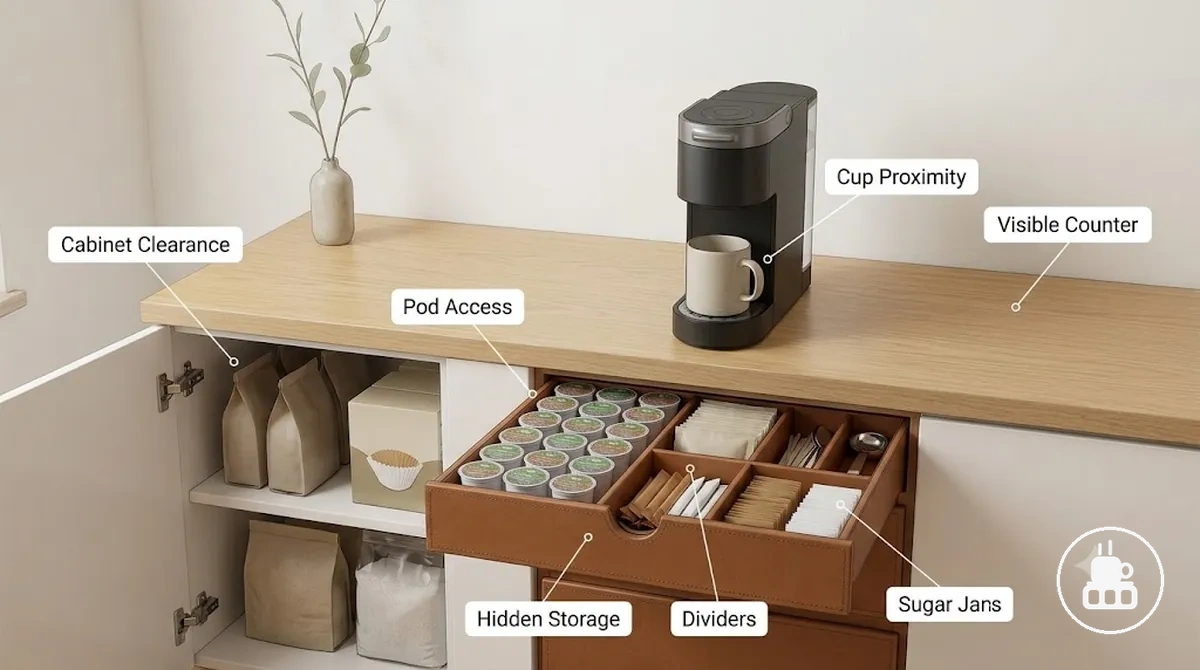
Use dividers to separate small items and reserve the easiest-to-reach positions for supplies used most often. Daily access frequency, not visual preference alone, should decide what stays on the counter and what moves into storage.
A practical split keeps the active routine near the machine and moves refill quantities or occasional supplies behind a drawer or cabinet boundary.
Hidden-storage split
- Divided drawer: extra pods and small refill items that need category separation.
- Cabinet: spare sugar, filters and less-frequent supplies when the door can open without blocking the coffee routine.
- Near the machine: frequently used mugs or cups when moving them into storage would add unnecessary steps.
- On display: only the items used often enough to justify permanent counter space.
Tiered and Shelf Layouts for Vertical Storage
Tiered and shelf layouts increase storage capacity without widening the counter footprint. They are useful only when the added height does not interfere with upper cupboards, machine lids or reservoirs, and every frequently used item remains stable and reachable.
Check height, depth, stability and clearance together rather than treating vertical capacity as an automatic space saving.
| Feature | Good-fit condition | Failure signal | Decision |
|---|---|---|---|
| Tier height | Upper items remain visible and reachable | The tier meets a cupboard or interferes with machine opening | Use a lower tier or another storage pattern |
| Shelf depth | Rear items can be reached without moving the front row | Frequently used supplies disappear behind other items | Choose a shallower shelf or reduce what stays on it |
| Base stability | The unit stays steady as cups or containers are removed | The shelf slides, rocks or makes stacked items unstable | Use a stable base or change the layout |
| Under-cabinet clearance | The shelf and stored items fit while cupboard doors and machine access remain usable | Storage blocks a door, lid, reservoir or cleaning path | Reduce height or move storage away from the obstruction |
Small-Counter Coffee Station Ideas That Preserve Workspace
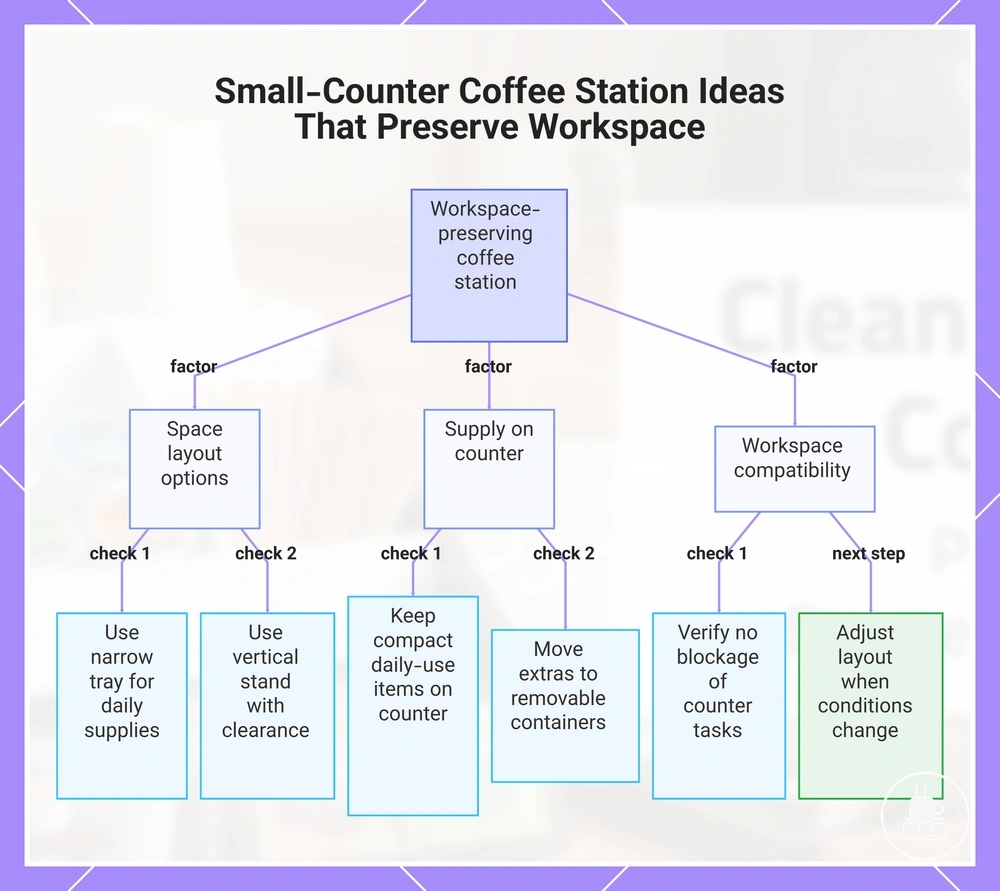
On a small counter, preserve a usable prep area first and fit the coffee station into the remaining zone. A compact organizer succeeds when it contains the routine without turning the whole worktop into coffee-only space.
Use a narrow tray when the daily set is small enough to stay contained, or a vertical stand when upper clearance and reach allow it. Removable containers are useful when the same counter must switch between coffee and food-preparation tasks.
Corner placement can free central workspace, but only if it does not make the machine reservoir, controls or cleaning area harder to reach.
These ideas adapt coffee station organizers to limited counters rather than solving every kitchen-storage problem. For broader compact-layout guidance, see small-space coffee station ideas.
Small-counter fit check
- Narrow footprint: the tray or organizer fits without consuming the prep area.
- Vertical clearance: a stand or shelf leaves cupboards and machine access usable.
- Daily-only display: refill extras move into removable containers, drawers or cabinets.
- Corner use: placement opens central workspace instead of creating an awkward reach.
- Machine access: controls, reservoir, cup area and cleanup path remain clear.
- Recheck after changes: machine size, counter depth and routine changes can alter the fit.
The visual below summarises the same small-counter decision: protect working space, contain daily supplies, and use vertical or corner storage only when access remains comfortable.
Arranging Pods, Cups, and Condiments Without Visual Clutter
Arrange pods, cups and condiments by access frequency: keep routine items in clear, separate positions and move refill quantities or occasional supplies out of the visible coffee zone. One supply type per container or boundary makes the station easier to read at a glance.
Storage position, visibility and container choice should change with how often each supply is used.
| Supply type | Storage position | Visibility rule | Clutter risk |
|---|---|---|---|
| Pods | Container near the coffee machine | Keep visible when used daily | Higher if left loose |
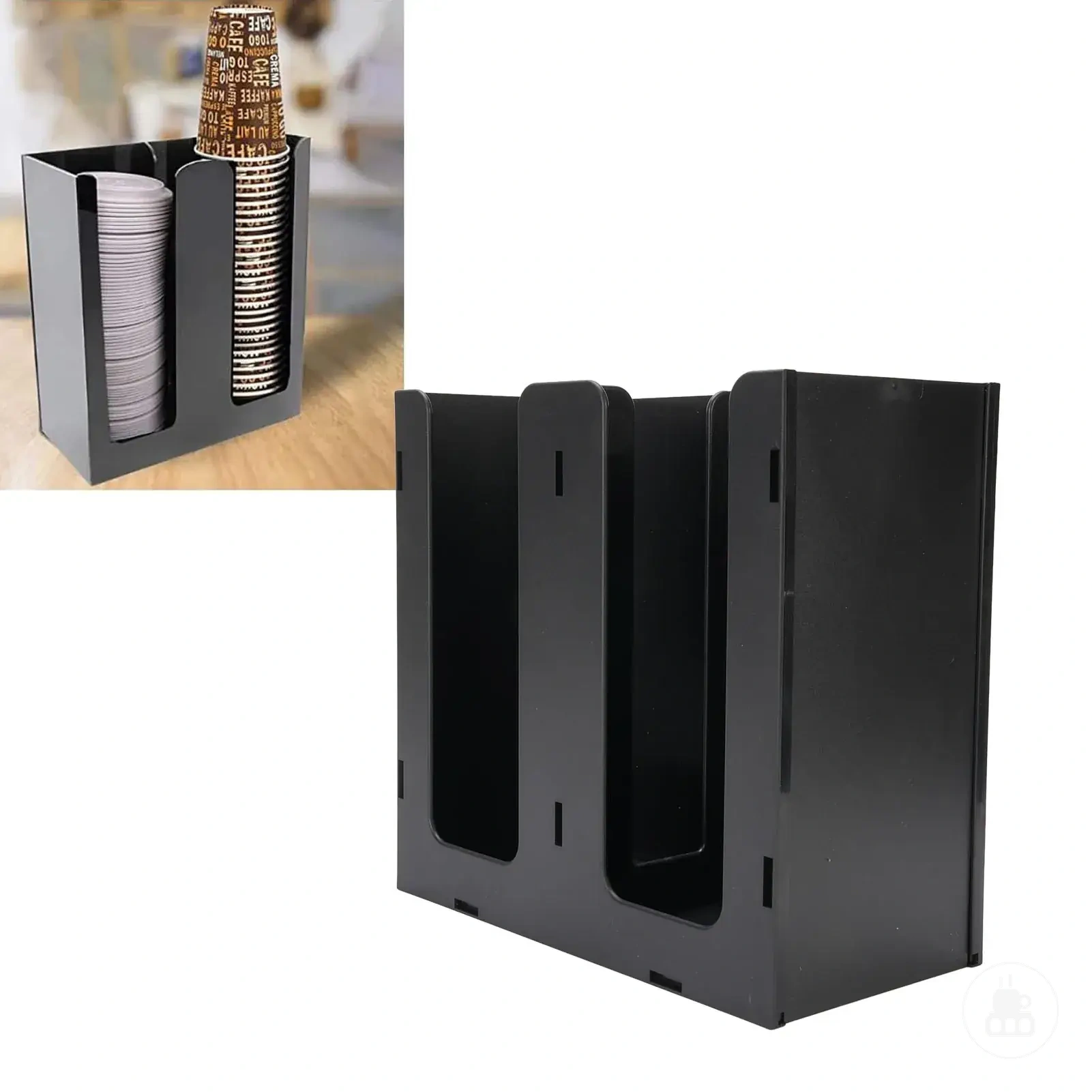
| Cups or mugs | Open shelf or nearby holder | Display only regularly used cups and lids | Higher when overcrowded |
| Condiments | Small jars or grouped container | Keep sweeteners and syrups visible when used frequently | Higher if containers are mixed |
| Stirrers | Dedicated container | Keep accessible without spreading out | Higher when stored loosely |
| Filters | Drawer or enclosed container | Store out of sight when not needed daily | Lower when contained |
| Refill extras | Drawer or cabinet | Keep off display until refill is needed | Lower when separated from daily supplies |
Keep the display limited to supplies used regularly; lower-frequency items belong in drawers or cabinets. For a more detailed grouping method, see the pods, cups and condiments setup.
Refill smaller containers instead of displaying bulk quantities when visual order matters. This keeps the daily-use boundary stable even when backup stock is larger.
Decorative Coffee Station Organizer Ideas That Still Function
Decorative choices work when they also improve containment, access or visibility. A decorative item that occupies working space without helping the routine is clutter, even if it matches the room.
Material and form can still support function: a wood tray defines a boundary, a metal tier adds vertical capacity, and a clear container improves at-a-glance identification when its contents stay organized.
Compare decorative elements by their storage role and by the condition under which they stop helping.
| Decorative element | Functional value | Keep it when | Reduce or remove it when |
|---|---|---|---|
| Wood tray | Creates one boundary for daily supplies | Frequently used items fit without crowding | Supplies stack or spill beyond the tray |
| Metal tier | Adds vertical storage within a small footprint | Clearance, stability and reach are adequate | It blocks a cupboard, machine opening or useful sight line |
| Clear container | Makes contents easy to identify | One category is kept together and refilled neatly | Mixed or excess contents create visual noise |
| Jar grouping | Separates sweeteners or condiments | The jars hold routinely used items | Low-use jars multiply across the counter |
| Mug display | Keeps frequently used cups within reach | The displayed mugs are part of the normal routine | The display exceeds daily use or restricts workspace |
| Seasonal accent | Adds visual character | It sits outside access and cleanup paths | It occupies storage or working space |
Function should stay ahead of appearance: labelled jars may clarify contents, while extra signs, unused ornaments or excessive seasonal accents can make the same station harder to use.
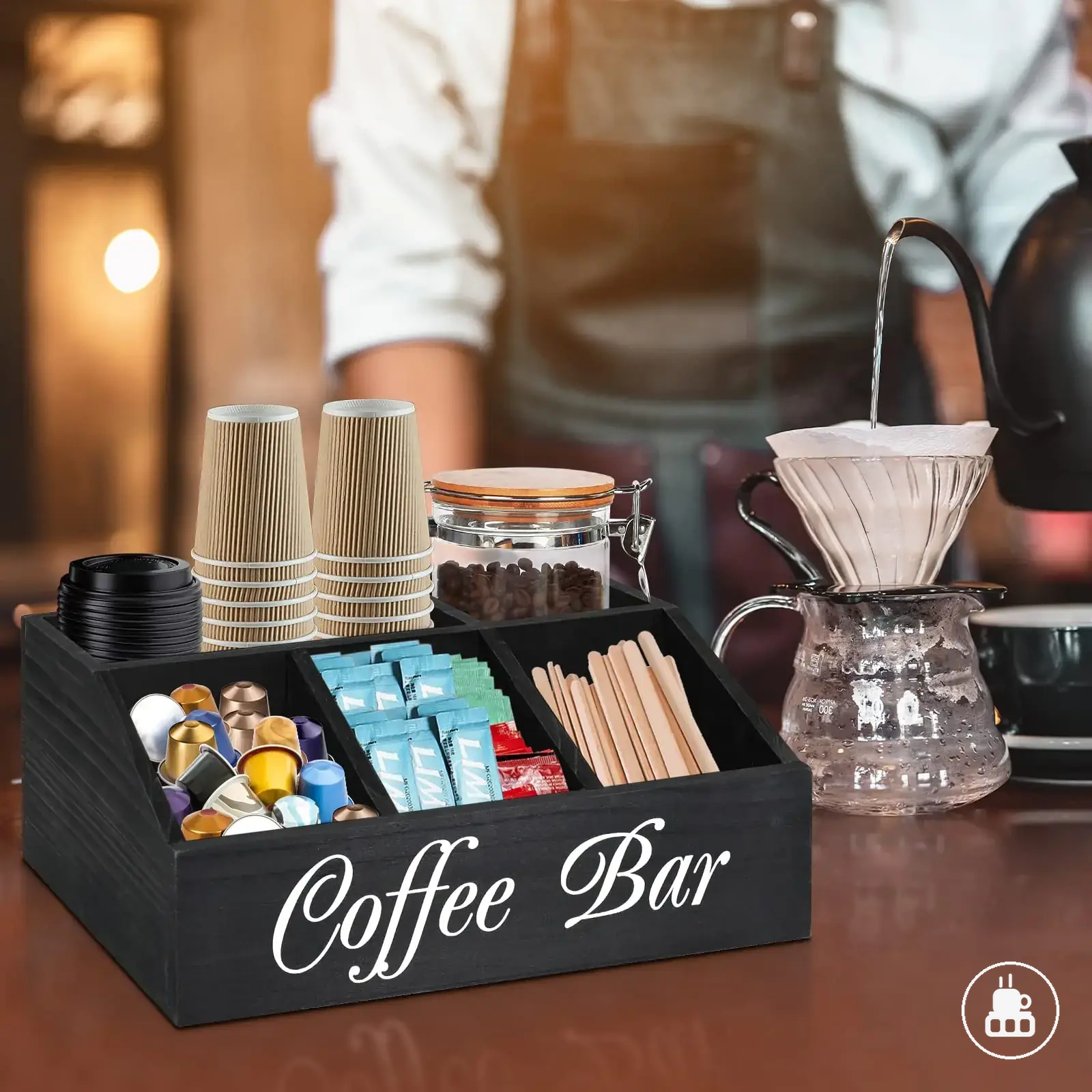
The products below are examples of organizer styles already represented on this page. Use the fit criteria above before opening a listing, and check dimensions, machine clearance and current product details on the third-party listing before deciding.
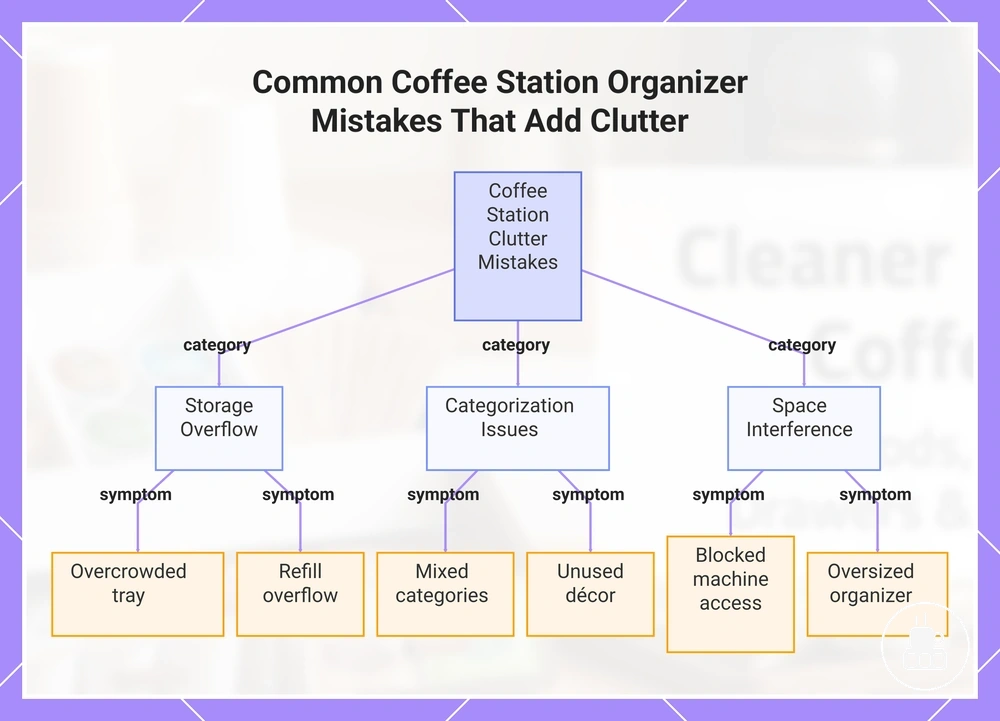
Common Coffee Station Organizer Mistakes That Add Clutter
Coffee station clutter usually returns when the storage boundary no longer matches the routine: daily and backup supplies mix together, categories lose their positions, or the organizer interferes with machine and counter access.
| Symptom | Likely cause | Check | Adjustment |
|---|---|---|---|
| Overcrowded tray | Daily and backup supplies share one small zone | Items stack, spill beyond the tray or compete with cup placement | Keep routine items on the tray and move refill stock elsewhere |
| Mixed categories | Pods, condiments and tools lack separate boundaries | Different supply types blend into one pile | Give each category its own container or defined position |
| Blocked machine access | The organizer occupies the lid, reservoir, cup or cleaning path | You must move storage before using or cleaning the machine | Shift the organizer away from the access path or reduce its size |
| Oversized organizer | The footprint is larger than the routine requires | Useful prep surface disappears around the coffee zone | Choose a smaller footprint or display fewer items |
| Unused décor | Display pieces occupy functional counter space | An item adds no storage, access or cleanup value | Remove it or move it outside the working zone |
| Refill overflow | Backup stock stays in the active daily-use area | Extra supplies remain visible after daily containers are full | Store backup stock off the counter and refill smaller containers as needed |
If the problem continues after these local adjustments, use reduce coffee station clutter to review broader layout and space problems.
The visual below groups the six common failure patterns so you can match a visible clutter signal to the layout condition that needs correction.